
Search the full document set. Find the passage that answers the question. Check it against the source, every clause, contradiction and version change in one place.
.svg)


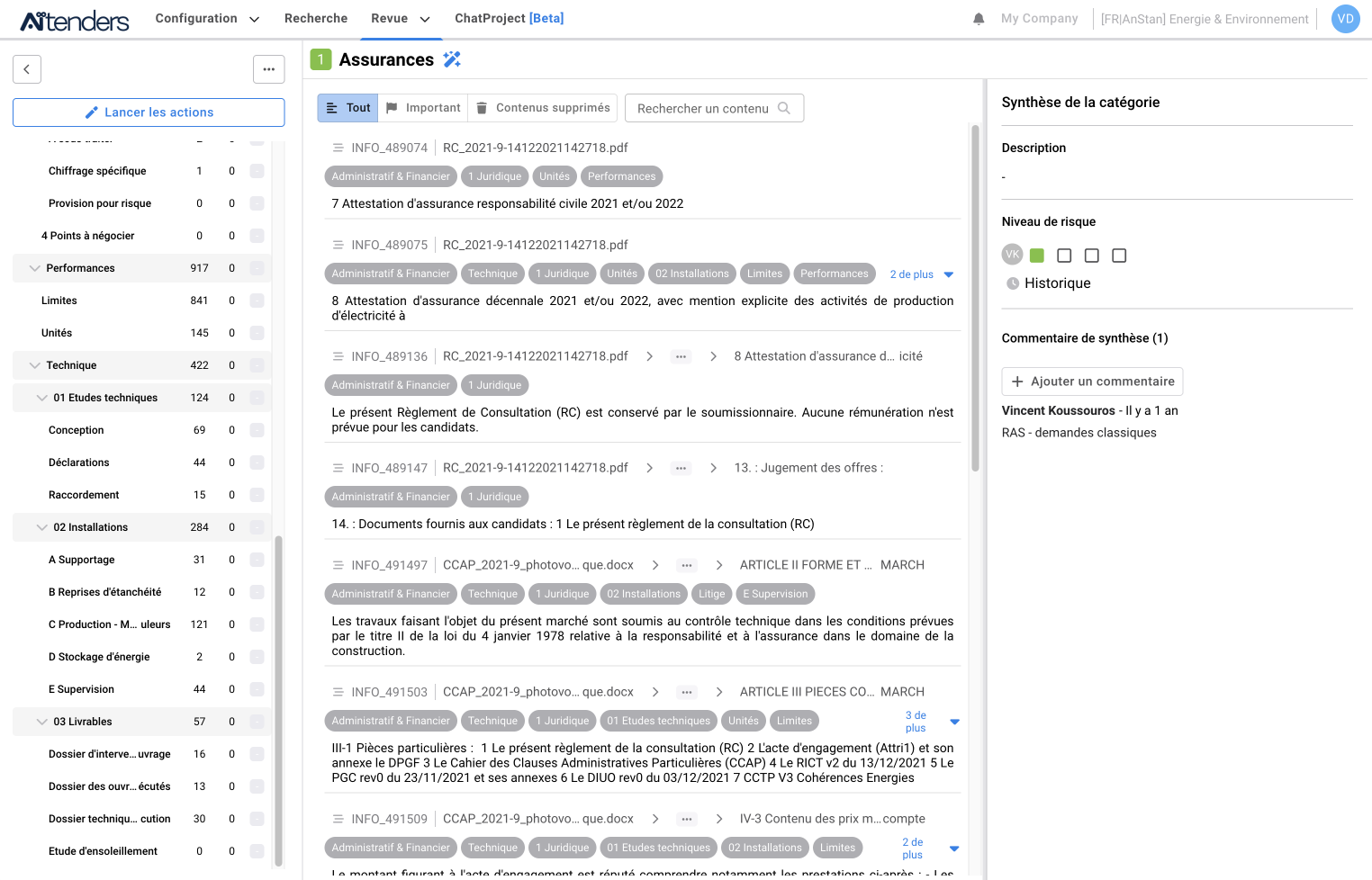
A multi-lot tender hides its traps in the annexes: critical clauses, contradictions between documents, versions nobody tracked. Aitenders surfaces all three, and shows you the passage behind every answer.
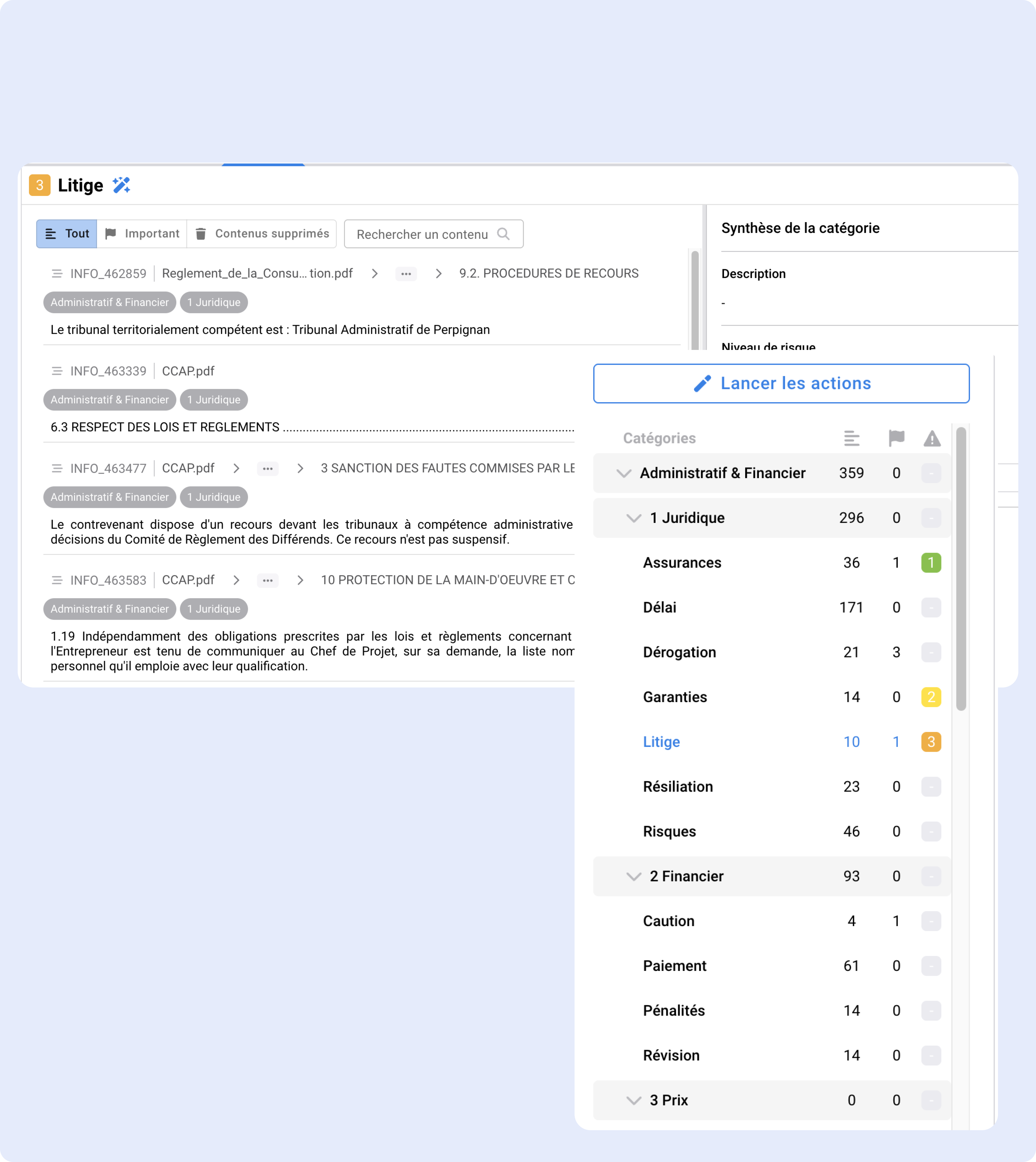
A tender split across a dozen lots becomes one structured scope at upload. Lots, sections, criteria, and the links between them, mapped before you start.
Penalties, liabilities and sensitive clauses are flagged wherever they sit. Documents are checked against each other, so contradictions surface before submission, not after.
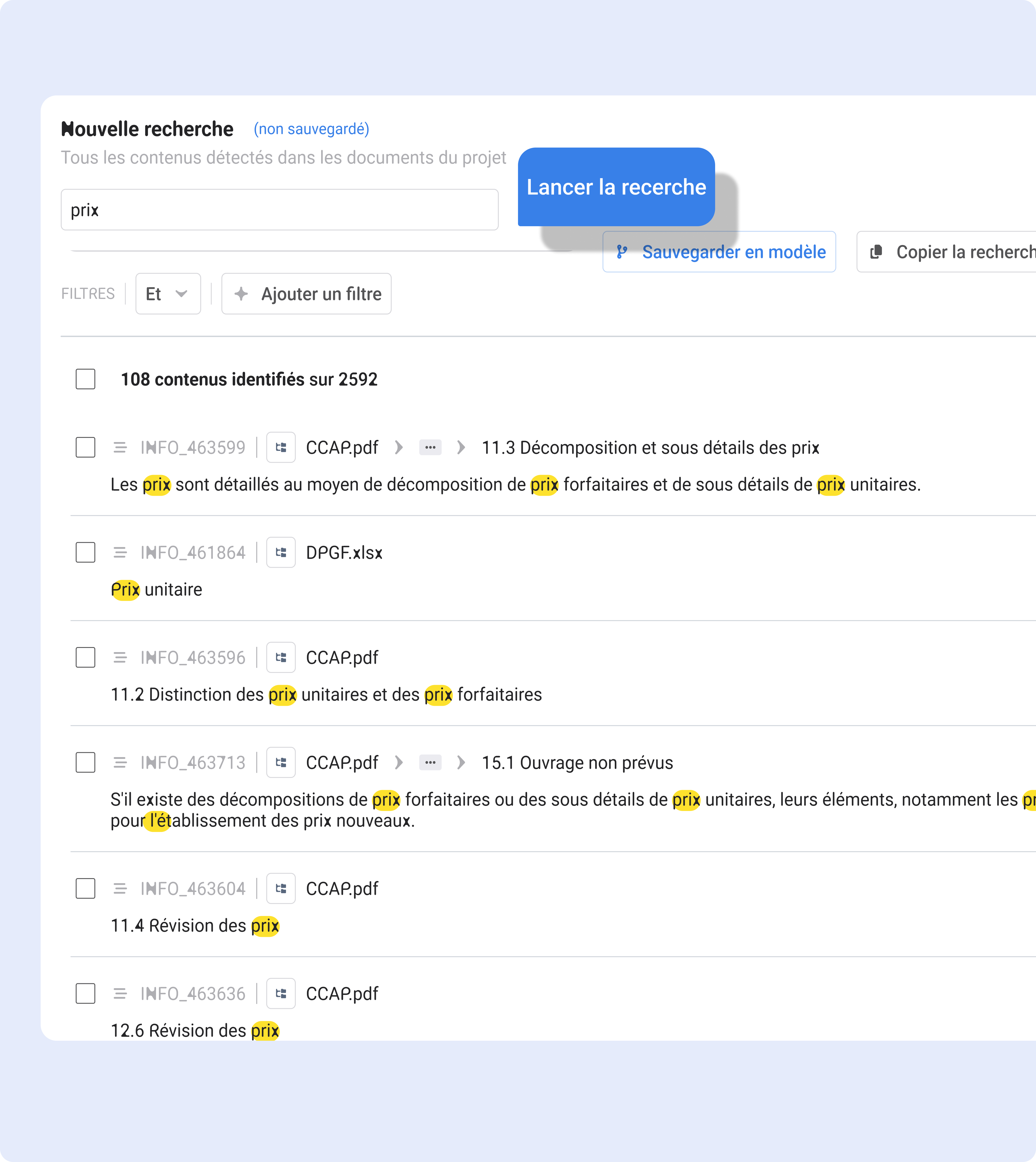
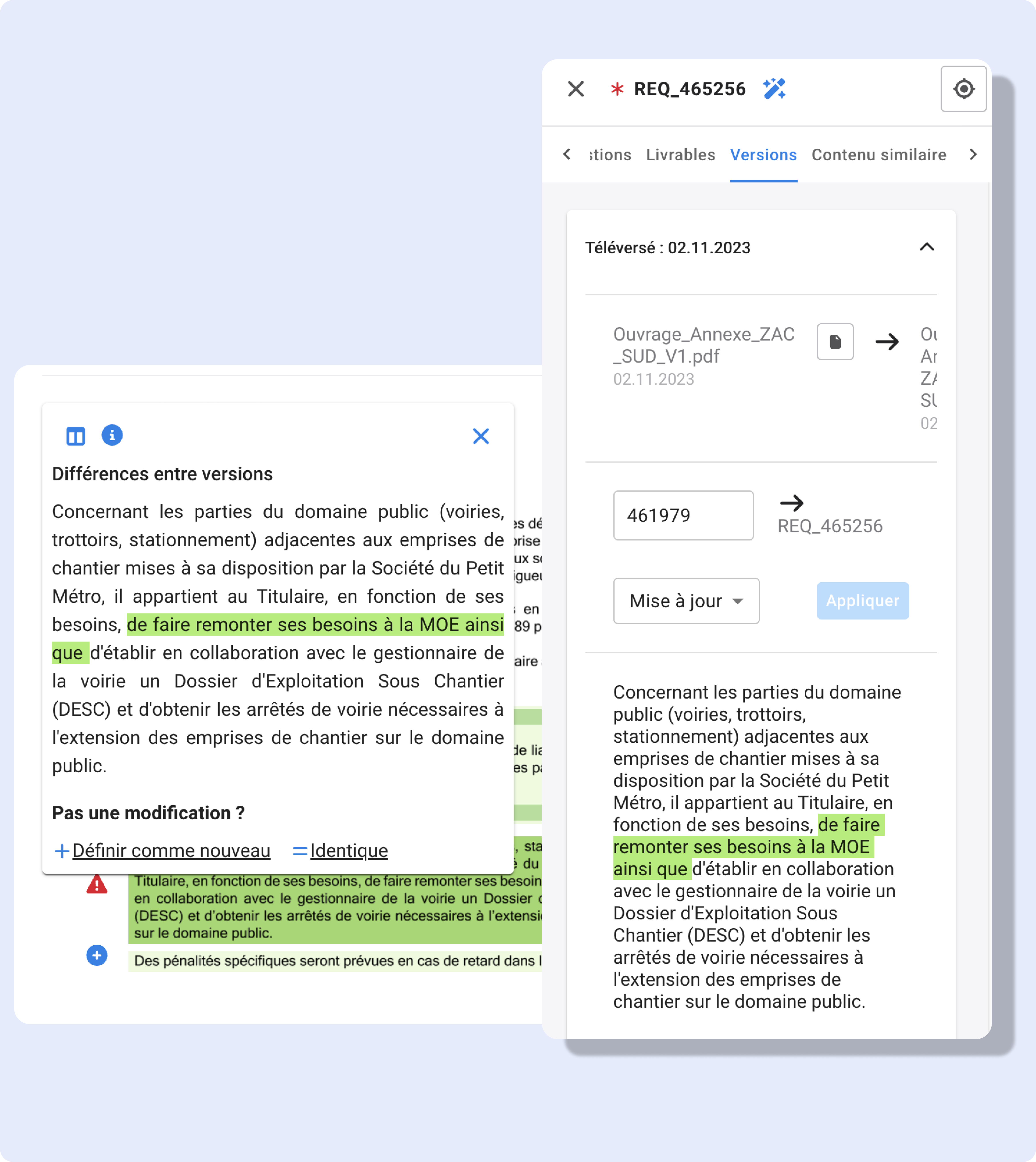
Clarifications and new versions keep moving the rules. Every Q&A and every document version lands in one place, compared against the last.
Criteria detection qualifies the bid. Augmented reading controls the documents. Requirements management proves the coverage. One structured base underneath all three.
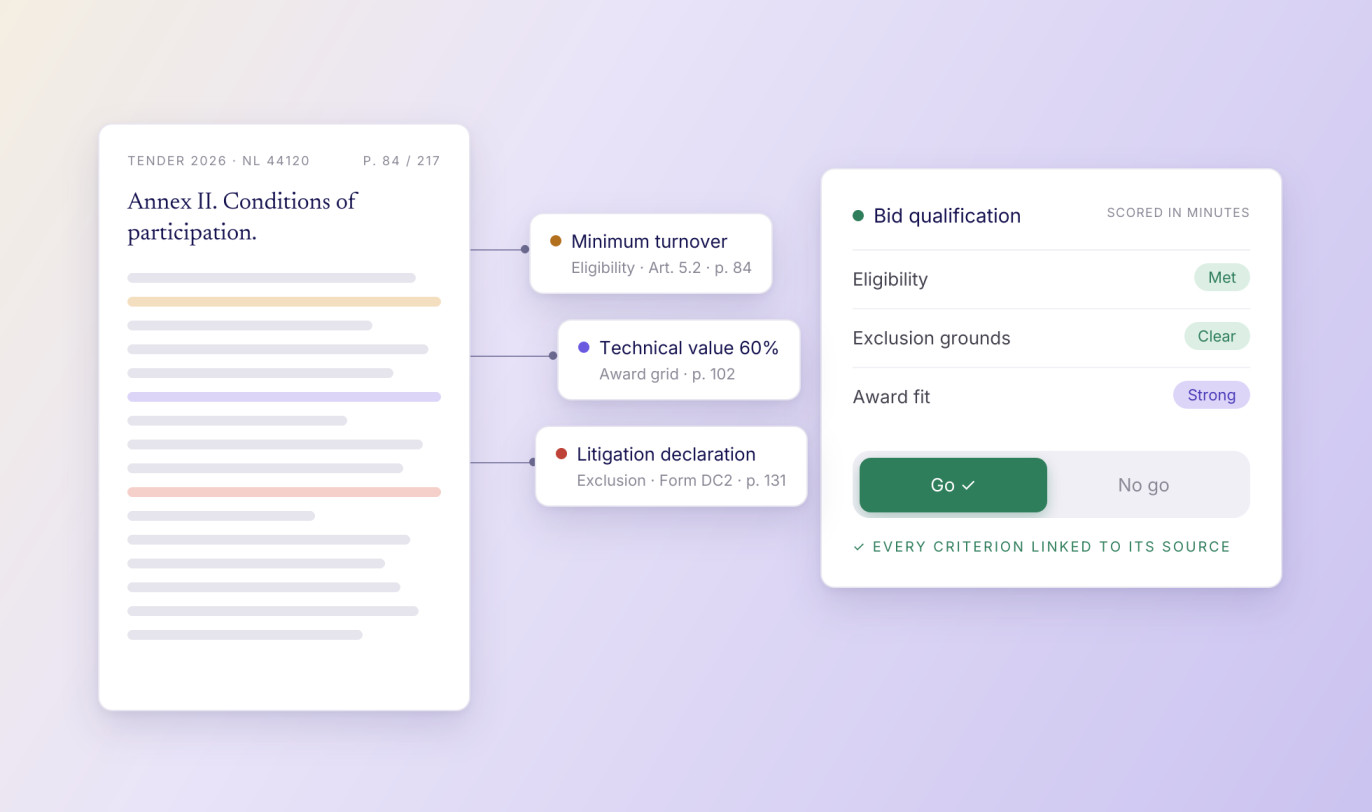
Know whether the bid is worth pursuing. Every criterion, risk and requirement behind your Go / No-Go, found and linked to its source clause. Under hours, not days.
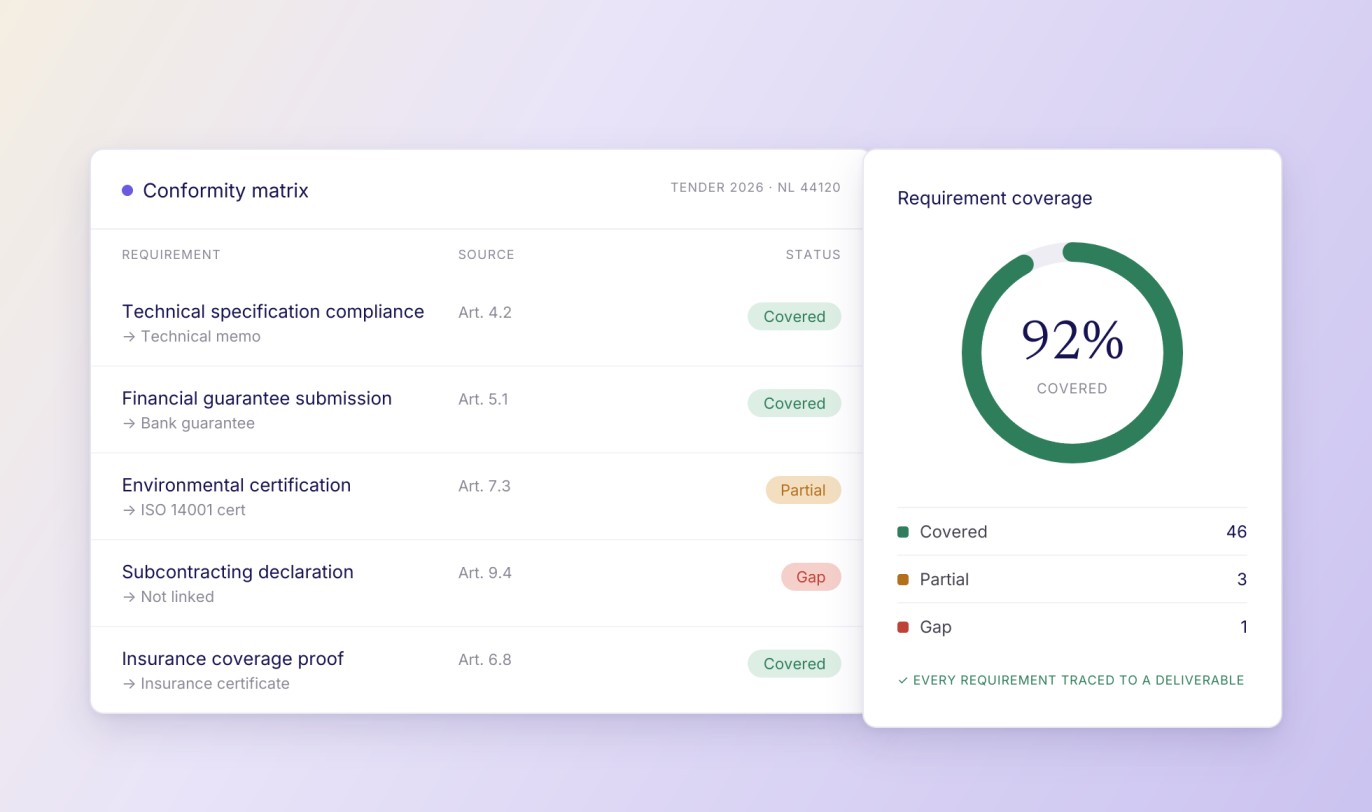
Turn scattered obligations into proven coverage. One shared conformity matrix, every requirement owned, every change traced. Zero rejections for formal non-conformity.

A document assistant answers one question about one file. Aitenders holds the whole tender package : every lot, every version, every clarification , and shows the passage behind each answer. When the client issues an addendum, you see what changed and what it affects.
Both land in the same place. Every Q&A is centralised, every document version is compared against the one before it, and the change is highlighted. You don't re-read 500 pages to find out what moved.
No. Your documents never train a model. Embeddings are isolated per project, so nothing crosses between projects or between clients, and the platform is Microsoft Zero Data Retention certified. You choose where it runs: our EU cloud, a sovereign EU cloud, your own cloud, on-premises, or fully air-gapped.



Aitenders is an AI platform built for the full tender-to-contract lifecycle. It provides a structured, AI-powered workspace that helps teams analyze documents, collaborate efficiently, and manage their workflows with greater clarity and control. By centralizing information and guiding teams through key steps, Aitenders enables more accurate reviews, stronger submissions, and better decision-making throughout the tender and contract lifecycle.
Aitenders helps organizations scale their tender and contract activities more effectively by reducing manual work, improving knowledge reuse, and aligning teams around a single source of truth. This results in faster execution, improved quality, and fewer coordination issues across projects.

.svg)


.svg)