
A multi-lot, multi-company bid becomes one live conformity matrix. Every requirement has an owner, every change is traced, and full coverage is provable the moment anyone asks.

Compliance overload

Missed requirements
.svg)
No proof of coverage
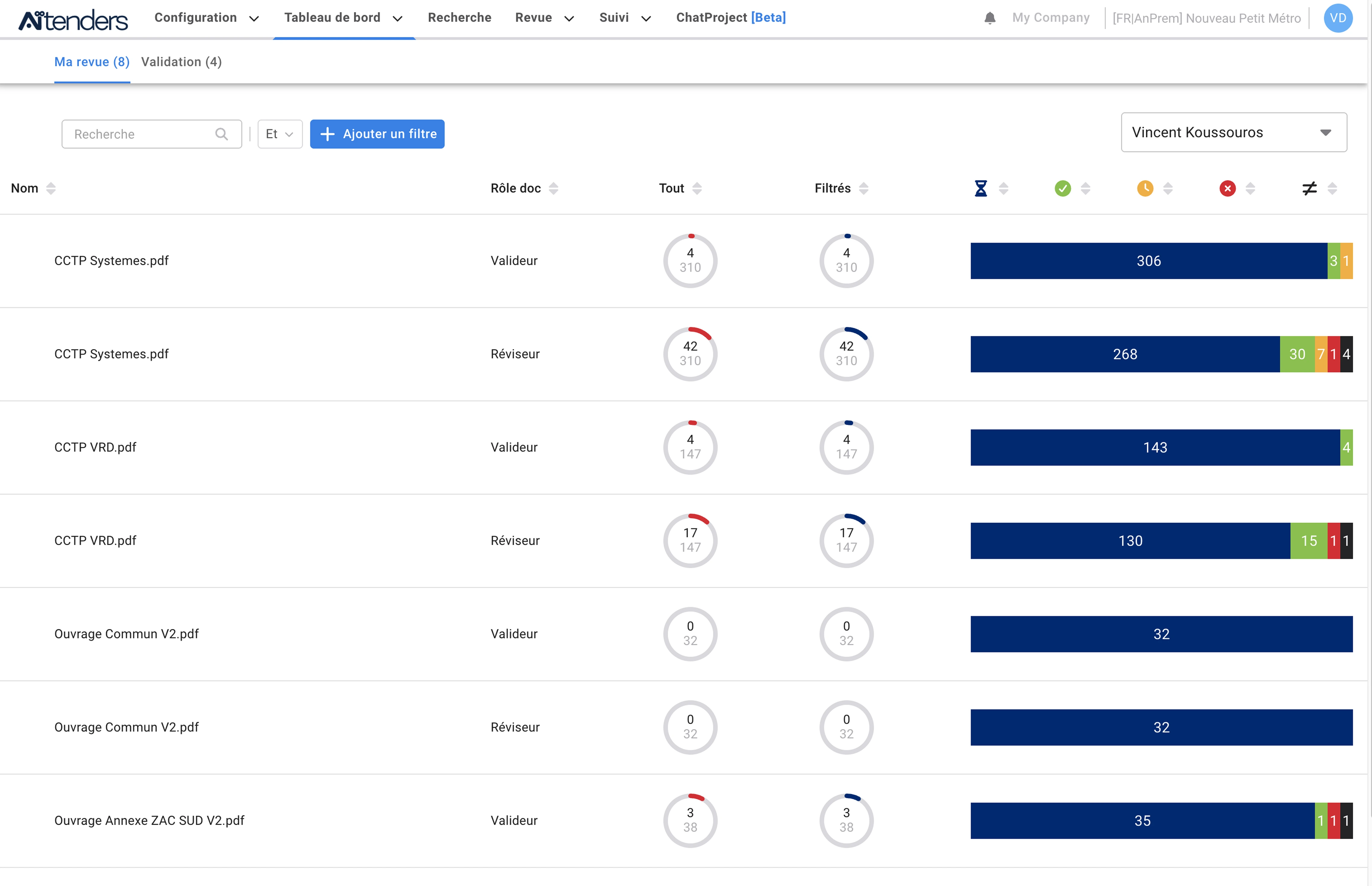
On a large tender, conformity is held together by hand - spreadsheets, email threads, and a dozen experts across several companies, each reading the same requirement differently. One miss can mean exclusion, or a dispute that follows you into delivery.
Load the documents. Every requirement is detected and classified, contradictions are flagged, and you open onto a structured base instead of a blank sheet.
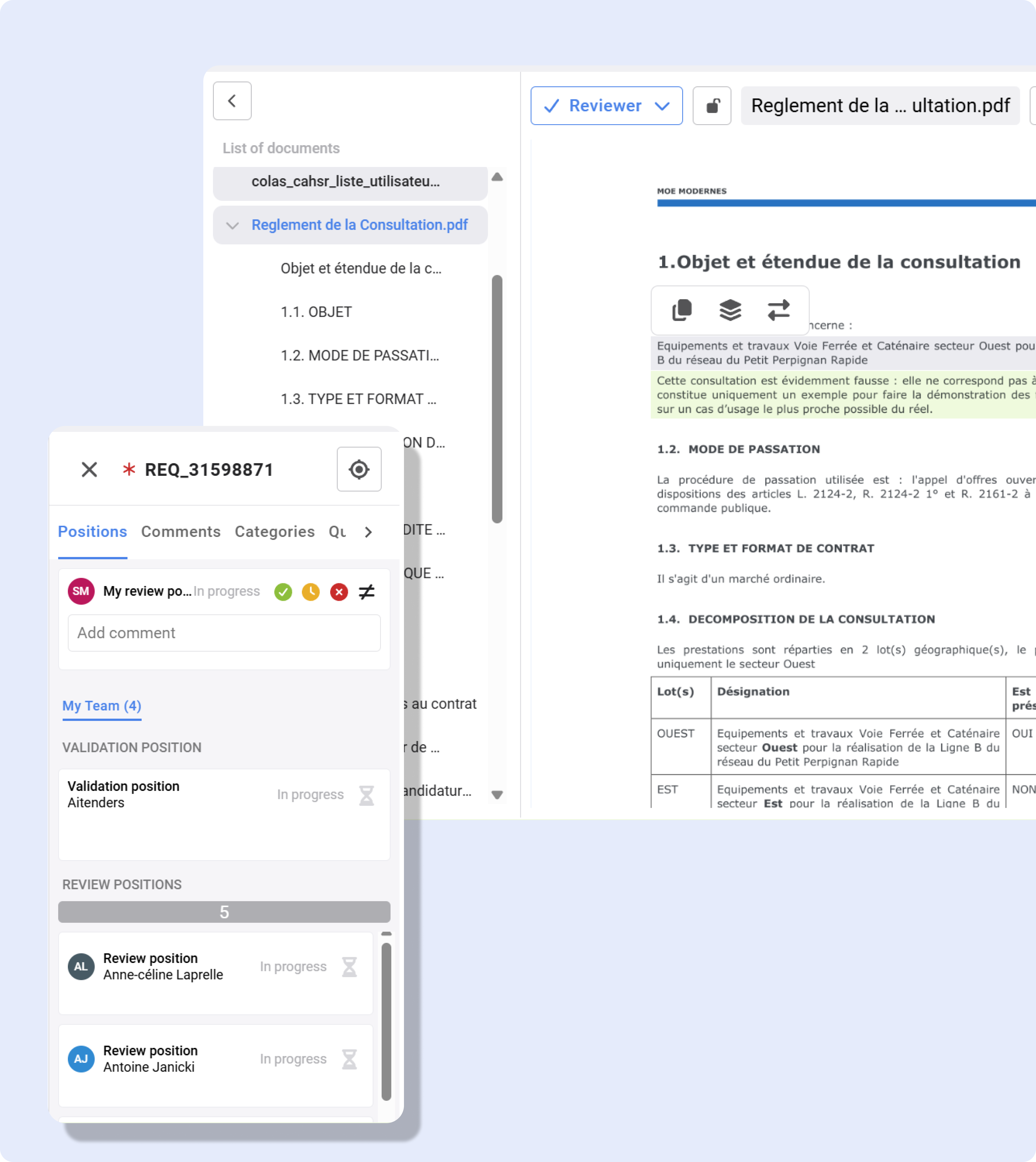
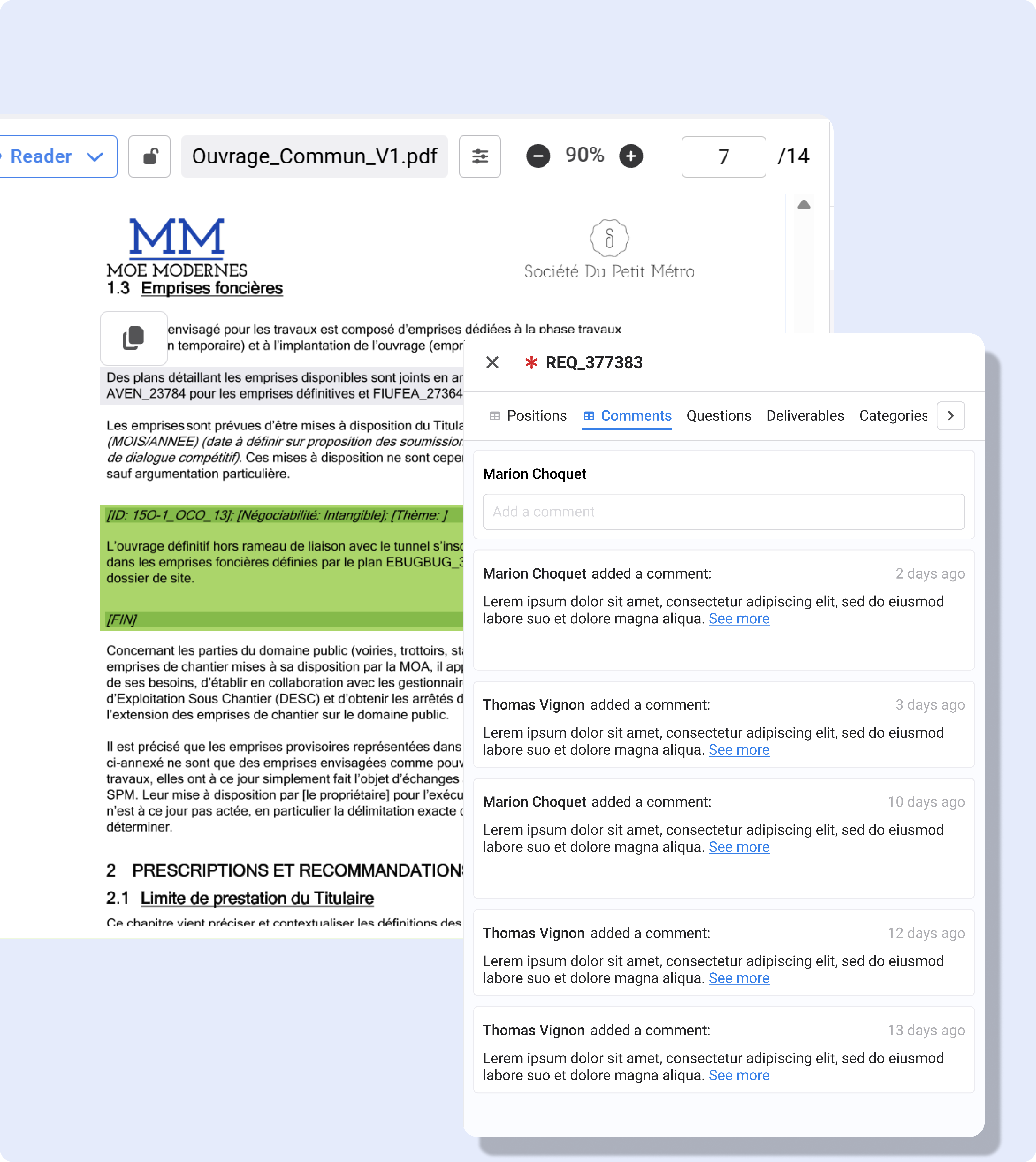
Every requirement is assigned to the right expert in one shared conformity matrix across disciplines, and across partner companies on a consortium bid. Spreadsheets and email threads go, and so do the blind spots.
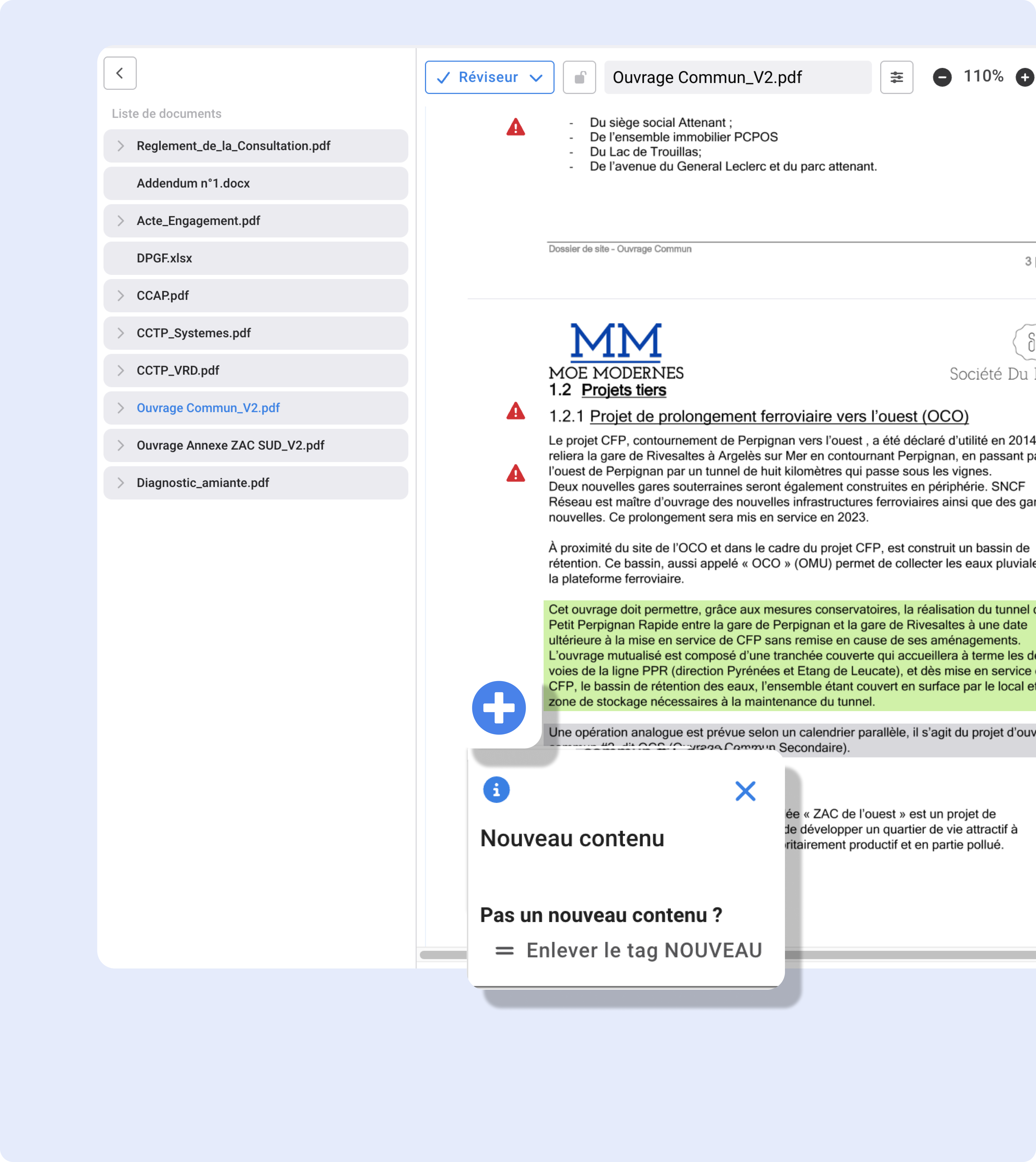
As clarifications and new versions arrive, every change is detected, compared and traced with an estimate of what it hits in the matrix. Coverage stays intact, and you can prove it the moment anyone asks.
Criteria detection qualifies the bid. Augmented reading controls the documents. Requirements management proves the coverage. One structured base underneath all three.
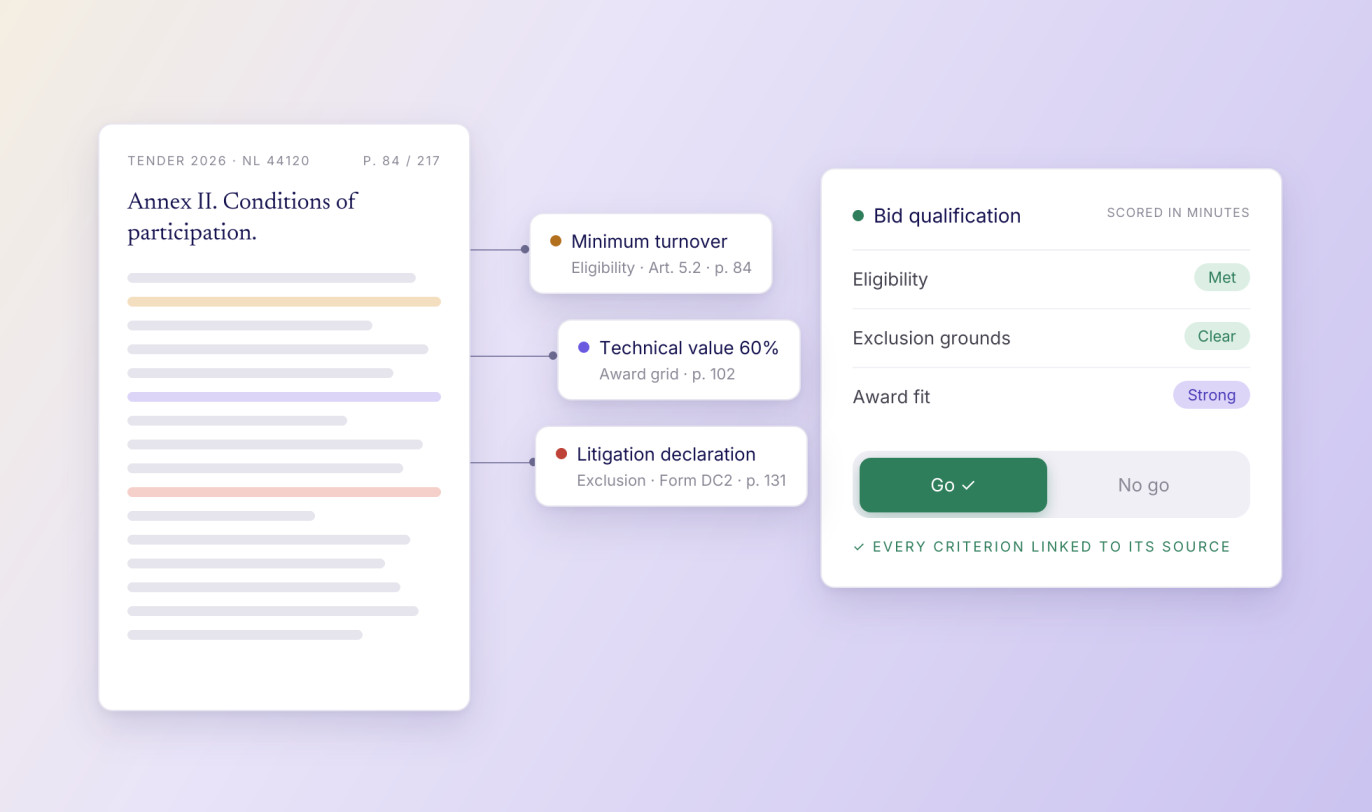
Know whether the bid is worth pursuing. Every criterion, risk and requirement behind your Go / No-Go, found and linked to its source clause. Under hours, not days.
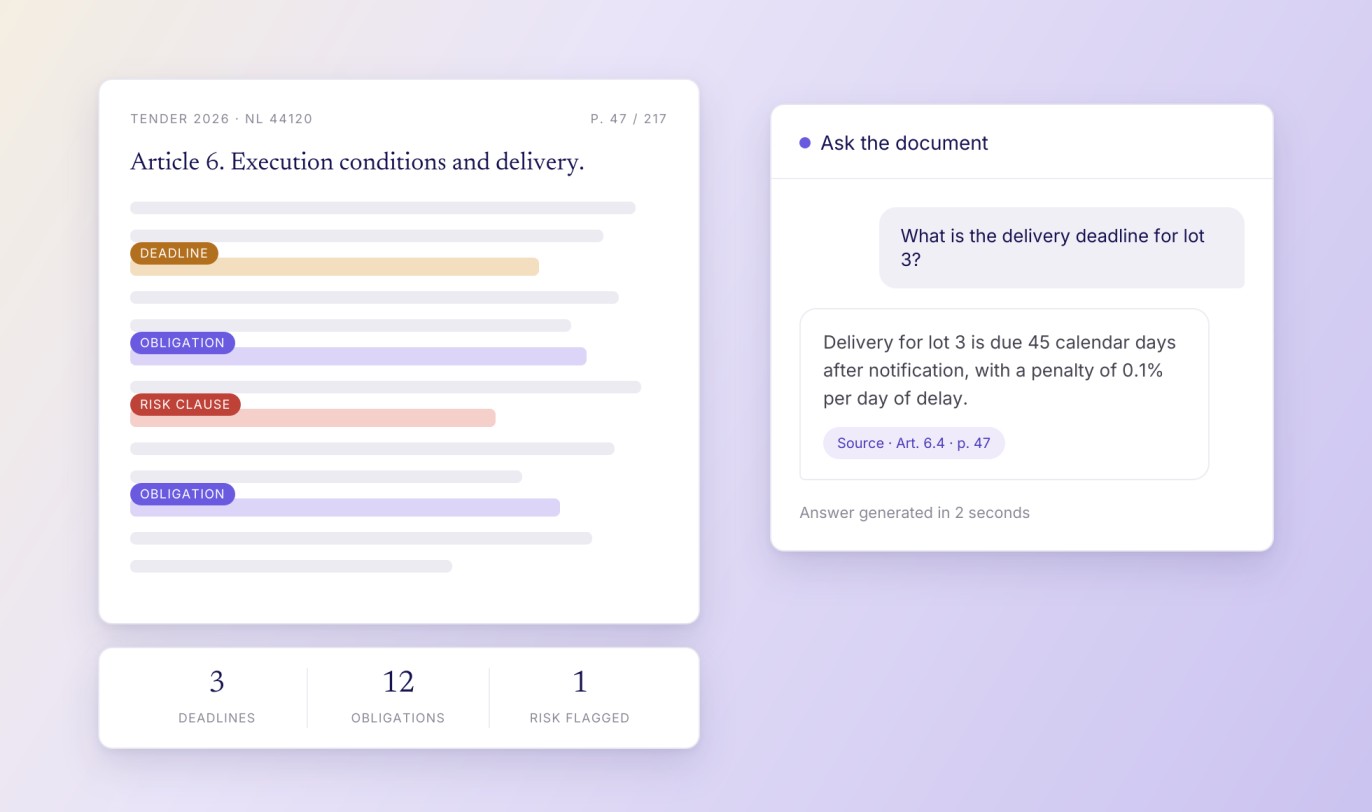
Read the whole tender package without missing the traps. Penalties, contradictions and every version change, in one place. 100% of critical clauses identified and prioritised.

The matrix stops being a file. Requirements are detected and classified at upload, assigned to a named owner, and checked as a set so coverage moves from about 85% verified at best to 100% verifiable, and a gap shows up while there is still time to close it. No parallel copies, no version reconciliation.
One shared matrix, with fine-grained access rights per partner: each partner sees their own scope, the lead sees everything, and every action is traceable to whoever took it. Each partner keeps their commercial autonomy, and every party works from the same reading of the same requirement.
Those tools are built for systems engineering, and they carry the process weight that comes with it. Aitenders is light-engineering: 100% conformity coverage on a tender or a programme, without the V-cycle overhead — and it starts from your tender documents rather than from a modelled requirement set.



Aitenders is an AI platform built for the full tender-to-contract lifecycle. It provides a structured, AI-powered workspace that helps teams analyze documents, collaborate efficiently, and manage their workflows with greater clarity and control. By centralizing information and guiding teams through key steps, Aitenders enables more accurate reviews, stronger submissions, and better decision-making throughout the tender and contract lifecycle.
Aitenders helps organizations scale their tender and contract activities more effectively by reducing manual work, improving knowledge reuse, and aligning teams around a single source of truth. This results in faster execution, improved quality, and fewer coordination issues across projects.

.svg)


.svg)