

Most tenders don't fail on the answer. They fail on the requirement nobody found, the version nobody updated, or the validation nobody recorded.
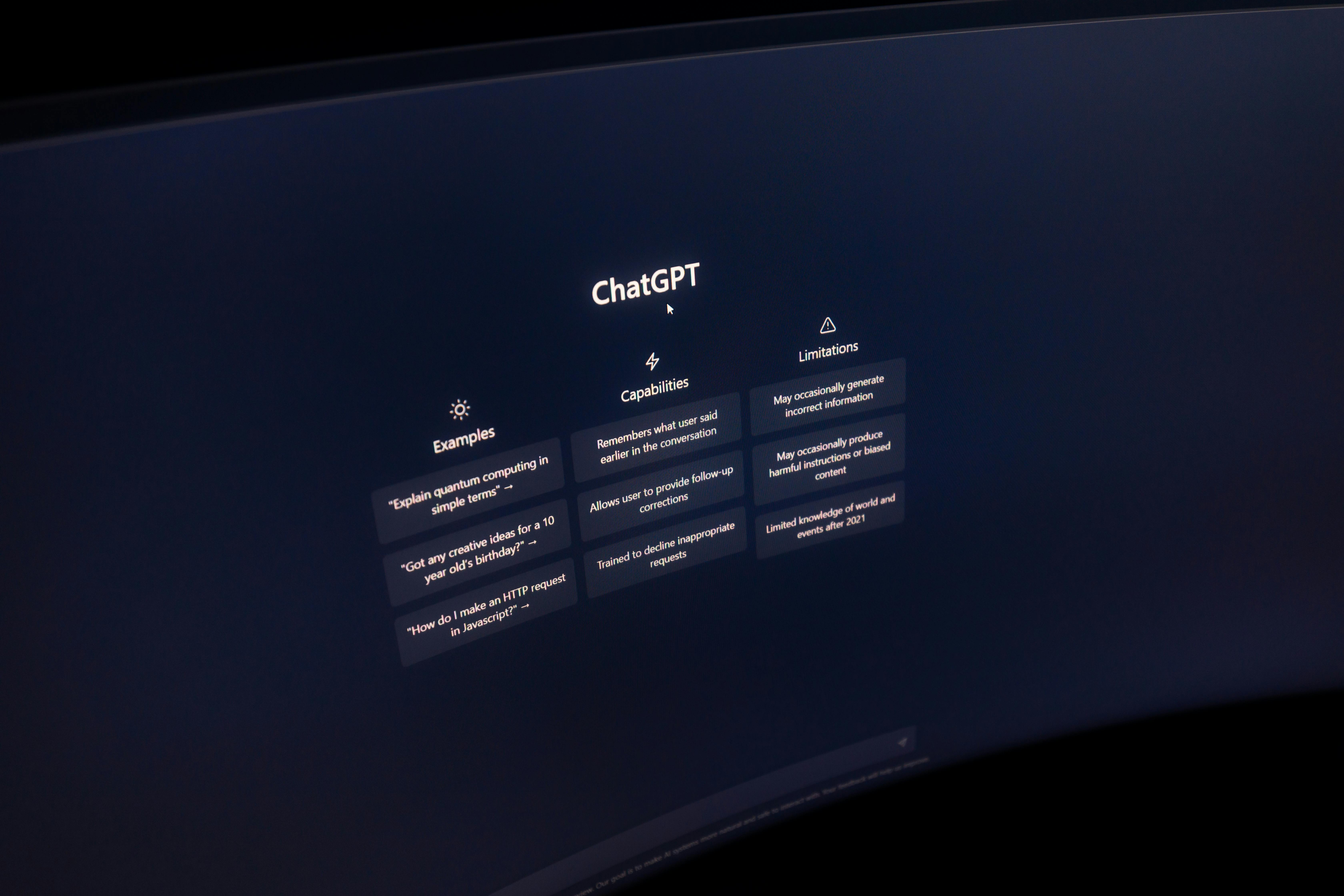
Your team already uses ChatGPT, Claude, or Copilot. They draft faster, summarize quicker, and polish language under deadline pressure. That's real value, and 65% of organizations now regularly use generative AI in at least one business function.
But here's what keeps going wrong: an addendum changes the penalty clause and three people keep working from the old version. The compliance matrix misses a mandatory certification hidden in a cross-reference. The bid committee asks "are we covered?" and nobody can point to proof.
These aren't writing problems. They're governance problems. And no general-purpose AI was built to solve them. That's the gap that AI tender software, built specifically for tender documents, is designed to close.
Here are 8 gaps that separate a drafting assistant from a platform your team can actually rely on, and why teams looking for AI for tender documents are moving beyond generic tools.
%201.png)
1. Requirement extraction across documents
General-purpose AI summarizes whatever you paste in. But it never sees the full picture. Skip one annex and the gap stays invisible.
Non-compliant tenders are routinely set aside at the first evaluation gate, regardless of quality. A missing document, a wrong format, an unmet eligibility criterion. None of these show up when you're summarizing sections one at a time in a chat window.
Aitenders reads all your documents at once and builds a single, searchable requirement register. Every obligation linked to its source clause. One click to list. One click to export.
2. Risk and contradiction detection
General-purpose AI only looks where you point it. It applies general linguistic understanding, with no domain expertise in construction, infrastructure, or public procurement. No proactive scanning. No cross-document contradiction detection. That's not AI tender analysis, that's a text summarizer with no context.
Aitenders scans your entire document set the moment you upload it, with domain-specific analysis built for tender environments. Contradictions, similarities, and high-risk clauses are flagged automatically, so your experts spend time on decisions, not on hunting.
3. Response drafting grounded in requirements
General-purpose AI drafts from a prompt. It doesn't know what the tender requires, what your team committed to three sections earlier, or what you delivered on the last project like this one.
Aitenders drafts inside the same workspace where your requirements and risks live, pulling from your knowledge base and past deliverables. Every response is grounded in what the client actually asked for.
4. Version control and addenda tracking
How many times has a mid-tender clarification changed the rules, and nobody caught every ripple effect?
General-purpose AI can't tell you what changed, what it impacts, or who's still using yesterday's version. There's no AI version control for tender documents, just a prompt box that treats every paste as day one.
Aitenders detects every change, maps the impact across your requirements and response sections, and routes updates to the right owners for revalidation. Your offer stays coherent as the tender evolves.
5. Multi-expert collaboration
General-purpose AI is a single-user tool. When your technical, commercial, and contractual leads draft in parallel, there's no shared workspace, and the only coherence check is a stressed senior reviewer at midnight.
The average team involves 7-8 people in the bid response process, each working on their section. Without a shared system, inconsistencies hide between handoffs until it's too late to fix them.
Aitenders assigns ownership at the requirement level, tracks progress across every contributor, and runs coherence checks between technical, commercial, and contractual sections, before the final reread, not during it.
6. Governance and audit trail
General-purpose AI leaves zero trace. Who validated what? When? Based on which version of which clause? Nobody knows. In regulated procurement, bids can be rejected on procedural grounds alone, and without traceability, you can't prove compliance even if you achieved it.
When the process depends on memory instead of evidence, your best people carry the risk alone. Over 88% of proposal professionals report facing stress or mental health challenges related to their work, and the tenders with the weakest governance are the ones that burn people out fastest.
Aitenders links every validation to its source clause and version, with structured workflows for committee reviews. This is what AI tender management looks like when governance is built into the process, not bolted on after the fact.
7. Knowledge reuse across projects
General-purpose AI may remember your past conversations, but it doesn't store structured expertise from your previous tenders. Every new bid, your team rebuilds the same structure, searches for the same past answers, and rewrites the same methodology sections.
80% of top-performing bid teams maintain an active content library. Teams without one spend 40% more time writing from scratch. The difference between winning and losing teams isn't talent. It's whether expertise is captured or lost after each project.
Aitenders builds a knowledge base that grows with each project you complete. Past requirements, responses, and expertise become searchable and reusable, so your next bid starts ahead.
8. Data confidentiality and control
Comfortable pasting your pricing strategy and penalty analysis into a shared cloud model?
General-purpose AI processes your content through infrastructure you don't control. No data isolation, no guarantee your inputs won't train the next model update.
Aitenders is EU-hosted with zero external API calls on your data. Complete isolation per client. No cross-client reuse. Your DCE stays yours.
Trusted by 150+ project teams at Veolia, Vinci, Equans, Eiffage, and Colas.
→ See the difference on your own documents. Book a demo
Explore:



.svg)
.svg)